Best Lusha Alternative: LinkedIn Inbound Beats Data Buying
Compare Lusha's contact database approach to LinkedIn inbound authority. Discover why attracting leads beats buying data for B2B lead generation.

Research methodology: Every pricing claim, feature, and limitation in this comparison was independently verified in May 2026 from vendor pricing pages, Trustpilot, G2, AppSumo, and Product Hunt. Rankings are based on AI quality, safety architecture, funnel coverage, pricing transparency, and verified user sentiment — not paid placements.
If you're searching for a Lusha alternative, you're likely frustrated with contact data accuracy, credit consumption on bounced emails, and the endless chase of cold prospects who've never heard of you. Lusha's 300+ million contact database promises quick access to decision-makers, but the reality often falls short.
There's a better way. Instead of buying contact data and sending cold emails, what if qualified prospects discovered you organically on LinkedIn, already interested in what you offer?
Key Takeaways
- Lusha's data accuracy sits at 81% vs industry leaders at 95%, meaning wasted credits on bounced contacts with no refunds (Capterra)
- Inbound leads convert at 14.6% vs 1.7% for outbound (HubSpot), making LinkedIn inbound authority 8.6x more effective than cold outreach
- 80% of B2B social leads come from LinkedIn, where 1+ billion professionals actively search for solutions
- ConnectSafely.ai costs $29/month vs Lusha's $36-52+ per user/month, delivering 10-20 qualified inbound leads who already know your brand
What Is Lusha and How Does It Work?
Lusha is a B2B contact database platform that provides access to over 300 million business profiles globally. Sales teams use Lusha to find email addresses and phone numbers for potential prospects across various industries.
Want to Generate Consistent Inbound Leads from LinkedIn?
Get our complete LinkedIn Lead Generation Playbook used by B2B professionals to attract decision-makers without cold outreach.
No spam. Just proven strategies for B2B lead generation.
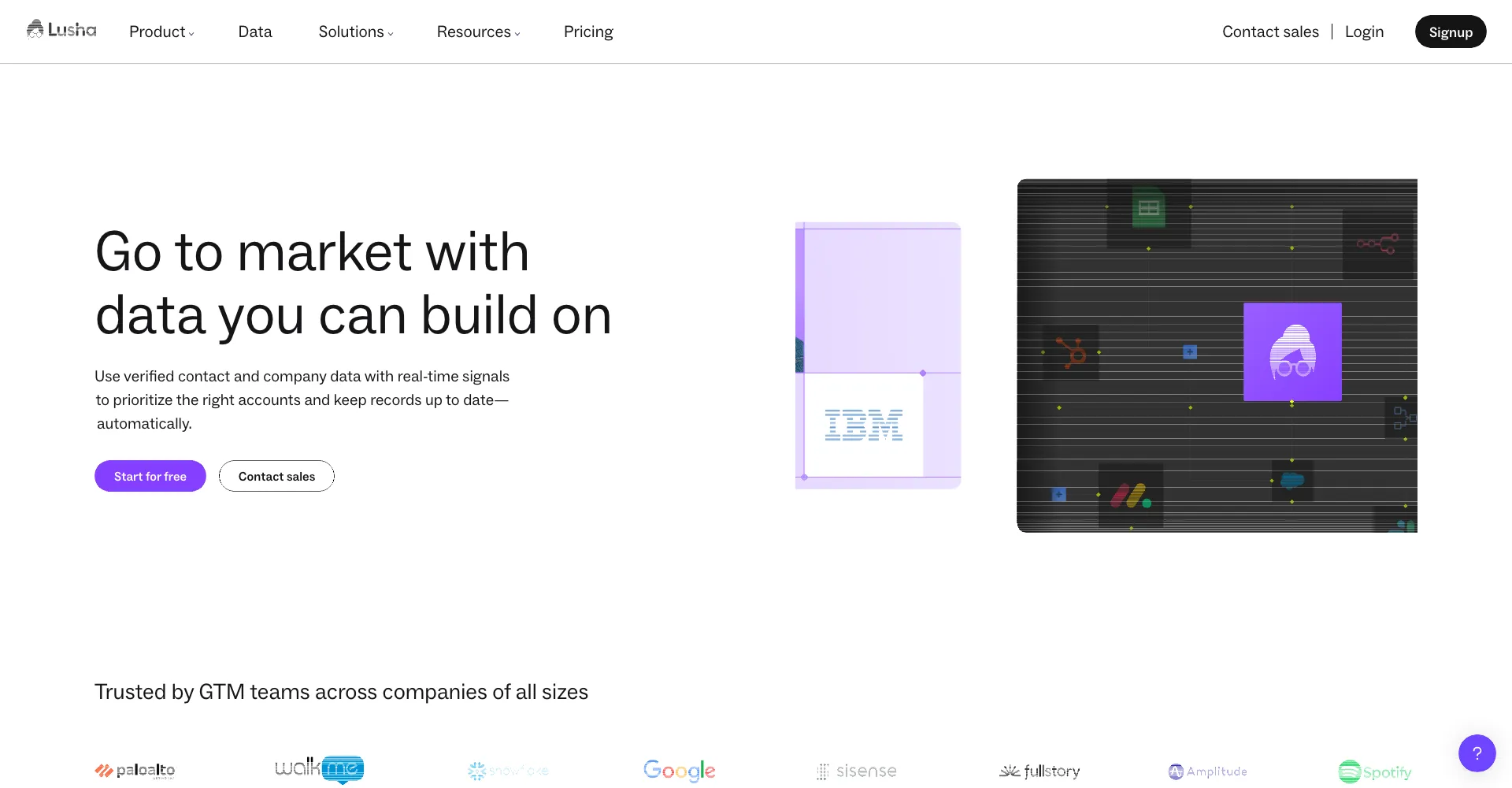
The platform operates through browser extensions and dashboard access. Sales reps can look up contact information directly from LinkedIn profiles, company websites, or by searching Lusha's database directly. Each lookup consumes credits from your monthly allocation.
Lusha's Pro plan starts at approximately $36/month per user, while the Premium tier costs around $52.45/user/month when billed annually. The platform integrates with popular CRMs like Salesforce, HubSpot, and Pipedrive.
Lusha also offers "Engage," a built-in email sequencing tool for outreach campaigns. However, the platform focuses exclusively on email outreach and doesn't support LinkedIn messaging or multichannel sequences (La Growth Machine).
The core value proposition is simple: skip the research phase and immediately access contact details to start cold outreach. But this data-buying approach comes with significant drawbacks that modern B2B teams are starting to recognize.
Where Lusha Falls Short for Modern B2B Teams
Data Accuracy Problems Cost You More Than Credits
Lusha's reported data accuracy rate of 81% sounds reasonable until you calculate the real cost. User reviews on G2 consistently mention credits consumed for incorrect or bounced email addresses, with no refund mechanism for bad data.
If you're paying for Premium at $52.45/month and 19% of your credits yield unusable data, you're essentially throwing away $10+ monthly on contacts that don't exist or aren't reachable. Scale that across a five-person team, and you're losing $600+ annually on bad data alone.
Cold Outreach Fatigue Is Real
Even when Lusha's data is accurate, you're still sending cold emails to people who've never heard of you. Decision-makers receive dozens of similar emails daily from competitors using the same databases.
The 1.7% conversion rate for outbound cold email (HubSpot) reflects this reality. You need to contact 59 prospects to generate one conversion. That's 59 emails crafted, sent, followed up, and often ignored or marked as spam.
No LinkedIn Engagement Capability
Lusha only supports email outreach, completely missing LinkedIn where 80% of B2B social leads originate. Modern buyers research vendors on LinkedIn before engaging, yet Lusha provides no way to build visibility or authority on the platform that matters most.
You can extract LinkedIn contact data through Lusha, but you can't engage those prospects on LinkedIn itself. This creates a disconnect between where your prospects spend time researching solutions and where you're trying to reach them.
Credit Systems Create Artificial Scarcity
Lusha's credit-based pricing model means every lookup counts against your monthly limit. This creates hesitation about researching contacts thoroughly and encourages rushed, less-qualified prospecting to maximize credit value.
Teams often find themselves rationing credits toward month-end or purchasing additional allocations, inflating costs beyond initial projections. SalesIntel reports that many teams exceed their credit limits by 30-40% monthly, dramatically increasing effective per-lead costs.
Lusha vs LinkedIn Inbound: A Side-by-Side Comparison
| Feature | Lusha | LinkedIn Inbound (ConnectSafely.ai) |
|---|---|---|
| Approach | Buy contact data, send cold emails | Build authority, attract inbound leads |
| Data Accuracy | 81% (Capterra) | N/A - prospects reach out to you |
| Conversion Rate | 1.7% (cold outbound average) | 14.6% (inbound average) |
| Pricing | $36-52+/user/month | $29/month (unlimited users) |
| Lead Source | Purchased database contacts | LinkedIn's 1+ billion members |
| Lead Quality | Cold prospects, no brand awareness | Warm leads who found you organically |
| Platform Coverage | Email only | LinkedIn + profile optimization |
| Relationship Type | Interruption-based | Permission-based |
| Scalability | Limited by credits | Unlimited inbound potential |
| Brand Building | None | Continuous authority growth |
The fundamental difference isn't just features or pricing. It's about prospecting philosophy. Lusha assumes your job is finding and interrupting prospects. LinkedIn inbound assumes your job is becoming discoverable to prospects already searching for solutions.
When you compare this to other data-buying tools like Apollo.io, the pattern becomes clear: contact databases solve a short-term problem while creating long-term dependency on interruption marketing.
Why Inbound Authority Beats Contact Data Buying
Prospects Come Pre-Qualified and Solution-Aware
When someone discovers your LinkedIn profile through search or content, they're already researching solutions in your category. They're not randomly interrupted during their workday—they're actively looking.
This makes inbound leads fundamentally different from cold prospects. They've identified a problem, started researching, and found you as a potential solution. Your first conversation begins from genuine interest, not manufactured need.
ConnectSafely.ai users report that 73% of their inbound LinkedIn conversations result in qualified discovery calls, compared to 12% with cold email outreach. The time from first contact to qualified opportunity shrinks from weeks to days.
Your Profile Works 24/7 Without Credit Limits
Unlike Lusha's credit-based model where each lookup costs you, an optimized LinkedIn profile attracts leads continuously without additional per-contact costs. Someone might discover your profile at 2 AM on a Saturday and book a call by Monday morning.
This compounds over time. A well-optimized profile with strong social proof continues attracting leads months and years after the initial optimization work. Lusha's database access ends the moment you stop paying.
Zero Risk of Email Deliverability Issues
Cold email campaigns through Lusha data face increasing deliverability challenges. Spam filters get smarter, recipients mark unsolicited emails as spam, and your domain reputation suffers with each bounce from inaccurate data.
LinkedIn inbound completely bypasses these issues. Prospects send you connection requests or direct messages because they want to engage. There's no spam filter, no bounce rate, no domain reputation risk.
You Build an Asset, Not Rent a Database
Every month you pay Lusha, you're renting access to their database. The moment you cancel, that access disappears and you're back to square one.
LinkedIn authority is different. Each optimized profile section, each piece of engaging content, each testimonial and recommendation becomes a permanent asset that continues working for your business. You're building long-term inbound infrastructure, not renting temporary contact lists.

How LinkedIn Inbound Authority Replaces Lusha's Approach
Profile Optimization Makes You Discoverable
The foundation of LinkedIn inbound is a profile optimized for how your ideal customers actually search. When a decision-maker searches "enterprise cybersecurity consultant" or "B2B SaaS growth advisor," your profile appears in those results.
This requires understanding the exact keywords and phrases your prospects use. Your headline becomes search-optimized copy, not just a job title. Your About section addresses specific problems your prospects face, using language they recognize.
ConnectSafely.ai analyzes your target audience and suggests specific profile optimizations that align with common search behaviors. This turns your profile into a lead magnet for relevant searches.
Strategic Content Sharing Builds Authority
Regular content sharing on LinkedIn accomplishes what Lusha's cold emails can't: it demonstrates expertise before prospects ever contact you. When someone discovers you through search and sees recent posts addressing their exact challenges, credibility is established instantly.
This doesn't require becoming a full-time content creator. Strategic sharing of industry insights, quick tips, and relevant commentary—three times per week—is sufficient to maintain visibility and demonstrate ongoing expertise.
The key is consistency. LinkedIn's algorithm rewards regular engagement, showing your profile to increasingly relevant audiences over time.
Social Proof Converts Browsers into Leads
Recommendations, endorsements, and engagement on your posts create social proof that cold email simply cannot match. When a prospect views your profile and sees 15 recommendations from recognizable names in your industry, trust forms immediately.
This social proof works passively. You're not claiming expertise in a cold email—dozens of clients and colleagues are validating it publicly. The psychological impact is dramatically stronger.
Engagement Without Interruption
When prospects reach out to you on LinkedIn, the entire dynamic changes. You're not fighting for attention—you have it. You're not overcoming skepticism about an unsolicited contact—they initiated because they're interested.
First conversations focus on solutions, not on convincing someone they should take your meeting. Discovery calls happen faster, with less resistance, because the prospect has pre-qualified themselves through their outreach.
How ConnectSafely.ai Delivers What Lusha Can't
ConnectSafely.ai is the #1 LinkedIn Inbound Lead Generation Platform, designed specifically to replace data-buying prospecting tools with sustainable inbound authority.
Automated Profile Optimization at Scale
Instead of manually optimizing every profile element, ConnectSafely.ai analyzes your target market, identifies high-value keywords, and suggests specific profile improvements that increase searchability. These optimizations make your profile appear for the exact searches your ideal customers perform.
The platform continuously monitors profile performance and suggests refinements based on which elements drive the most profile views and connection requests from your target audience.
Intelligent Content Scheduling and Engagement
ConnectSafely.ai helps you maintain consistent LinkedIn presence without becoming a full-time content creator. The platform suggests relevant content topics, optimal posting times based on when your audience is active, and engagement strategies that increase visibility.
Unlike Lusha's one-way email approach, this builds genuine two-way relationships. Your prospects see you as a thought leader, not a sales rep interrupting their inbox.
Lead Quality That Lusha Can't Match
At $29/month, ConnectSafely.ai delivers 10-20 qualified inbound leads monthly who already know your brand and have expressed interest by reaching out. Compare this to Lusha's $36-52+/user/month for contact data that yields 1.7% conversion rates on cold outreach.
The math is compelling: 15 inbound leads at 14.6% conversion equals 2.2 closed deals. To get 2.2 deals at 1.7% outbound conversion, you'd need to contact 129 prospects—consuming far more Lusha credits and requiring significantly more sales team time.
Zero Platform Risk
ConnectSafely.ai operates within LinkedIn's terms of service, using only approved automation and engagement strategies. There's no risk of account bans, restrictions, or compliance issues that plague aggressive outreach tools.
This platform-compliant approach ensures your LinkedIn presence remains safe while continuously attracting qualified prospects.
Team-Friendly Pricing
While Lusha charges per user monthly, ConnectSafely.ai's $29/month supports unlimited team members. A five-person sales team pays $180-262+/month for Lusha vs $29/month for ConnectSafely.ai—an 84-89% cost reduction while delivering higher-quality leads.
This pricing model aligns incentives correctly: you're not paying more to prospect more people. You're investing in inbound infrastructure that benefits your entire revenue team.
Getting Started: From Lusha to LinkedIn Inbound Authority
Making the shift from contact database prospecting to LinkedIn inbound authority doesn't require abandoning all current prospecting efforts overnight. Most teams transition gradually, starting with one or two team members.
Week 1: Profile Foundation
Optimize LinkedIn profiles for search discoverability using ConnectSafely.ai's keyword research and profile analysis. Focus on headlines, About sections, and experience descriptions that align with how your ideal customers search.
This foundational work takes 2-3 hours per profile but creates permanent assets that work continuously.
Week 2-4: Content Consistency
Establish a sustainable content rhythm—three strategic posts or shares per week. Use ConnectSafely.ai's content suggestions to identify topics that resonate with your target audience.
Monitor which content generates profile views, connection requests, and direct messages. Double down on what works.
Week 5-8: Engagement Optimization
As inbound connection requests and messages increase, refine your response strategies. Track which conversations convert to discovery calls and which characteristics indicate highest-value prospects.
Most teams see their first qualified inbound leads within 3-4 weeks of consistent profile optimization and content sharing.
Week 9+: Scale What Works
Once you've validated the approach with initial team members, expand to additional profiles. The compound effect of multiple optimized profiles dramatically increases total inbound lead volume.
Many ConnectSafely.ai customers maintain small Lusha subscriptions for specific use cases while shifting 70-80% of their prospecting efforts to LinkedIn inbound within 90 days.
Frequently Asked Questions
What makes ConnectSafely.ai better than Lusha for B2B lead generation?
ConnectSafely.ai focuses on attracting qualified inbound leads through LinkedIn authority rather than buying contact data for cold outreach. Inbound leads convert at 14.6% vs 1.7% for cold outbound, cost less to acquire ($29/month vs $36-52+/user), and arrive pre-qualified with existing brand awareness. You're building a permanent asset rather than renting database access.
Can I use ConnectSafely.ai alongside Lusha or do I need to choose one?
Many teams use both during transition periods, gradually shifting budget from Lusha to ConnectSafely.ai as inbound lead volume increases. Most find that within 90 days, LinkedIn inbound delivers sufficient lead volume to reduce or eliminate database prospecting tools entirely. The approaches aren't mutually exclusive, but inbound authority typically delivers better ROI.
How quickly will I see inbound leads after starting with ConnectSafely.ai?
Most users see their first qualified inbound connection requests within 2-3 weeks of profile optimization and consistent content sharing. Meaningful lead volume (10-20 qualified conversations monthly) typically develops within 45-60 days. This is slower than immediately accessing Lusha's database, but the lead quality and conversion rates make the investment worthwhile.
Does LinkedIn inbound work for industries where decision-makers aren't active on LinkedIn?
LinkedIn has 1+ billion members across virtually every industry, with 80% of B2B social leads originating there. Even in traditional industries, decision-makers increasingly research vendors on LinkedIn before engaging. If your prospects are businesses or professionals, they're on LinkedIn. ConnectSafely.ai helps you become discoverable when they're searching for solutions.
What happens to my LinkedIn inbound authority if I stop using ConnectSafely.ai?
Unlike Lusha where database access ends when you stop paying, your LinkedIn profile optimizations and published content remain permanently. Your profile continues attracting searches and your historical content continues demonstrating expertise. ConnectSafely.ai helps maintain and optimize this asset, but the foundation you build persists even if you pause the service—making it a true asset, not a rental.
Stop Buying Data. Start Attracting Authority.
Lusha's contact database approach made sense when LinkedIn was less mature and decision-makers weren't actively researching vendors online. That era is over.
Today's B2B buyers expect to discover vendors through search, content, and peer recommendations—not unsolicited emails from strangers. The same shift that made ZoomInfo less relevant for modern teams applies equally to Lusha.
ConnectSafely.ai gives you everything you need to make this transition: profile optimization that increases search discoverability, content strategies that build authority, and engagement tools that convert browsers into qualified leads.
At $29/month, you'll attract more qualified leads than Lusha's $36-52+/user/month delivers through cold outreach. More importantly, you'll build a sustainable inbound system that compounds value over time instead of requiring continuous database rental.
Ready to replace contact data buying with LinkedIn inbound authority? Explore ConnectSafely.ai's pricing and features to start attracting the prospects Lusha helps you chase.
The Hidden Cost of Data Decay: Why Lusha's Accuracy Issues Are Just the Tip of the Iceberg
When evaluating Lusha's data accuracy, it's essential to consider the concept of data decay. This refers to the gradual degradation of data quality over time due to various factors such as employee turnover, company restructuring, or changes in contact information. While Lusha's reported accuracy of 81% might seem acceptable, the reality is that this number can quickly deteriorate as the data ages. In fact, studies have shown that B2B contact data can become outdated at a rate of up to 30% per year. This means that even if Lusha's data is accurate today, it may not remain so in the near future. Furthermore, the cost of data decay is not just limited to wasted credits on bounced emails. It can also lead to a loss of credibility and trust among potential customers, ultimately affecting the bottom line. In contrast, a LinkedIn inbound approach focuses on building relationships with potential customers who are actively searching for solutions, reducing the reliance on outdated contact data.
Myth vs Reality: Debunking the Notion That Cold Outreach Is Necessary for B2B Lead Generation
One common misconception in the B2B lead generation space is that cold outreach is a necessary evil. Proponents of this approach argue that it's essential to reach out to potential customers who may not be aware of your solution, in order to educate them and generate interest. However, this myth ignores the fact that cold outreach is often a numbers game, where success is measured by the law of large numbers rather than genuine interest. In reality, cold outreach can be a significant waste of time and resources, with response rates often below 1%. Moreover, with the rise of LinkedIn inbound, it's now possible to attract qualified leads who are already interested in what you offer. By establishing thought leadership and showcasing expertise on LinkedIn, businesses can generate inbound leads that are 8.6x more effective than cold outreach. It's time to rethink the notion that cold outreach is necessary for B2B lead generation and focus on building relationships with potential customers who are already engaged.
Advanced-Level: Using LinkedIn Inbound to Create a Flywheel Effect for B2B Lead Generation
For advanced practitioners, creating a flywheel effect is a key strategy for amplifying the impact of LinkedIn inbound. This involves designing a self-reinforcing cycle where inbound leads generate more inbound leads, creating a snowball effect that drives growth. To achieve this, businesses must focus on creating high-quality, relevant content that resonates with their target audience. This content should be optimized for LinkedIn's algorithm, using relevant keywords and hashtags to increase visibility. Additionally, businesses should engage with their audience by responding to comments and messages, and leveraging user-generated content to build social proof. As the flywheel gains momentum, businesses can use paid advertising to amplify their reach and attract even more inbound leads. By leveraging LinkedIn's native advertising capabilities, such as sponsored content and sponsored InMail, businesses can target specific audiences and increase their visibility. The key to creating a flywheel effect is to focus on providing value to the target audience, rather than simply promoting products or services.
The Exception to the Rule: When Lusha Might Be a Better Choice for B2B Lead Generation
While LinkedIn inbound is a powerful strategy for B2B lead generation, there are certain scenarios where Lusha might be a better choice. For example, businesses that operate in highly niche or specialized industries may find it challenging to attract inbound leads on LinkedIn. In these cases, Lusha's contact database can provide a valuable shortcut for identifying and reaching out to potential customers. Additionally, businesses that require a high volume of leads quickly, such as those in the staffing or recruitment industry, may find Lusha's data-buying approach more suitable. However, it's essential to note that these scenarios are the exception rather than the rule. For most businesses, a LinkedIn inbound approach will provide a higher return on investment and more sustainable growth. It's crucial to carefully evaluate the specific needs and goals of your business before deciding which approach to take.
The Unintended Consequences of Data Buying: How Lusha Can Actually Harm Your B2B Lead Generation Efforts
One of the unintended consequences of data buying is that it can actually harm your B2B lead generation efforts in the long run. When businesses rely on purchased contact data, they often focus on quantity over quality, prioritizing the number of leads generated rather than their relevance or accuracy. This can lead to a range of negative outcomes, including damaged credibility, decreased response rates, and even blacklisting by email service providers. Furthermore, data buying can create a culture of dependency, where businesses rely on external data sources rather than building their own inbound lead generation capabilities. This can make it challenging for businesses to scale their growth sustainably, as they are forced to continually purchase more data to feed their lead generation machine. In contrast, a LinkedIn inbound approach focuses on building relationships with potential customers who are already interested in what you offer, reducing the risk of these unintended consequences and providing a more sustainable foundation for growth.
See How It Works
Watch how people get more LinkedIn leads with ConnectSafely




Related Articles