How to Convert LinkedIn Leads into Customers (2026 Guide)
Learn proven strategies to convert LinkedIn leads into paying customers. From first touch to closed deal—the complete B2B conversion playbook for 2026.

89% of B2B marketers use LinkedIn for lead generation, but only a fraction converts those leads into paying customers. According to Cognism's research, the disconnect isn't lead volume—it's the conversion process between first touch and closed deal.
The problem: most B2B professionals treat LinkedIn like a cold calling list. They generate connections but never build the trust required for purchase decisions. This guide covers the complete conversion framework—from first engagement to signed contract.
Want to Generate Consistent Inbound Leads from LinkedIn?
Get our complete LinkedIn Lead Generation Playbook used by B2B professionals to attract decision-makers without cold outreach.
No spam. Just proven strategies for B2B lead generation.
Key Takeaways
- Inbound leads convert at 14.6% vs. 1.7% for outbound—an 8X difference
- 95% of B2B buyers aren't actively in-market at any given time—long-term nurture is essential
- LinkedIn Lead Gen Forms average 13% conversion rates vs. 4.02% for typical landing pages
- The 70-20-10 content rule (educational-engagement-promotional) prevents audience fatigue while building pipeline
Why LinkedIn Leads Don't Convert (The Real Problem)
Most LinkedIn lead conversion fails at one of three stages:
Stage 1: Wrong Lead Quality
Not everyone who connects with you is a lead. If you're sending mass connection requests to anyone with a relevant job title, you're filling your pipeline with contacts—not prospects.
According to Evaboot's analysis, the average cold connection request acceptance rate is 10-15%. Of those who accept, fewer than 3% respond to follow-up messages. That's a 0.3-0.45% engagement rate from initial outreach.
Stage 2: No Trust Building Between Connect and Pitch
The most common mistake: pitching in the first message after someone accepts your connection. According to Martal Group's research, 95% of potential B2B customers aren't actively in-market at any given time.
If you pitch immediately, you're catching 95% of people at the wrong time—and burning the relationship for the 5% who might have been interested later.
Stage 3: No Systematic Follow-Up
Most sales reps stop following up after 1-2 messages. But B2B purchases typically involve 6-10 touchpoints before a decision. Without systematic nurture, warm leads go cold.
The LinkedIn Lead Conversion Framework
Here's the 5-stage framework that converts connections into customers.
Stage 1: Attract the Right Prospects
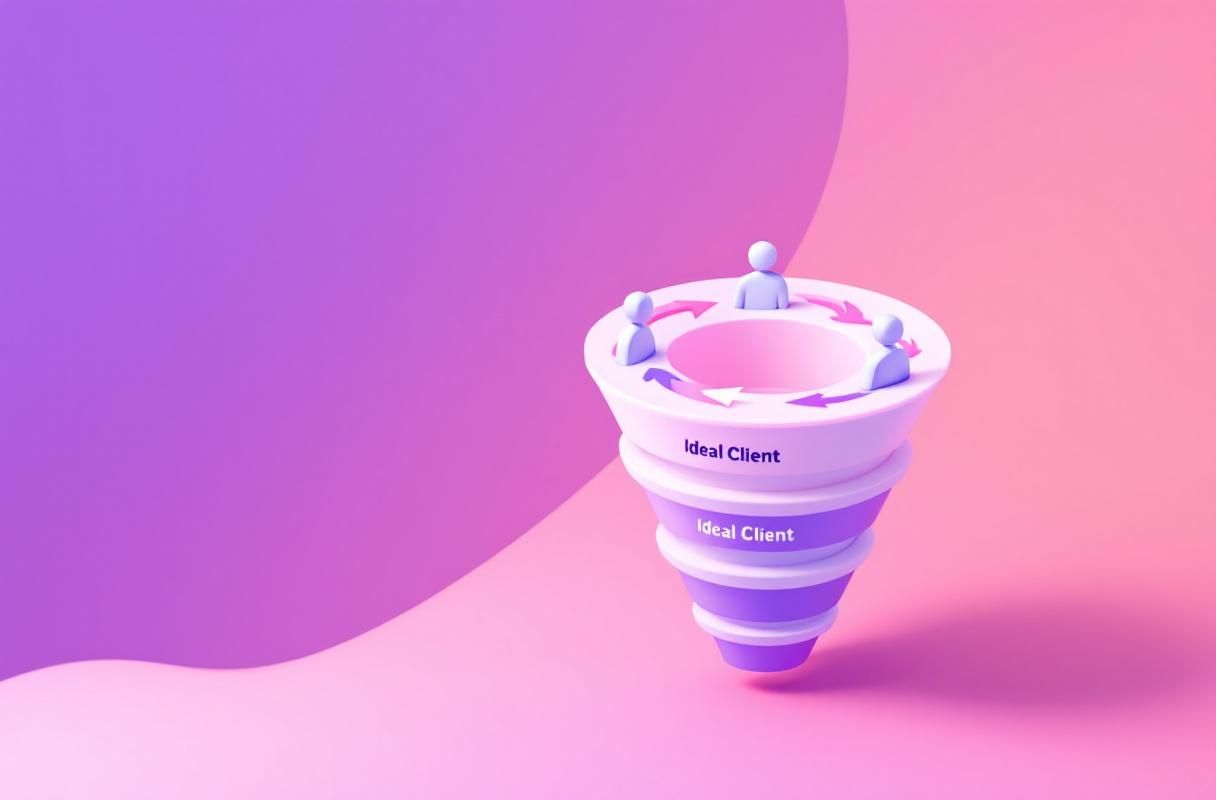
Conversion starts before the first connection. The key is attracting pre-qualified prospects—people who already have the problem you solve.
Profile optimization for conversion:
According to Cleverly's research, the most effective headlines follow this structure: [Who you help] + [How you help them] + [The result they achieve].
Instead of: "Sales Manager at TechCorp" Write: "Helping SaaS teams reduce churn by 40% through predictive analytics"
Your profile should answer three questions instantly:
- Who do you help?
- What problem do you solve?
- What results do you deliver?
Content that attracts buyers:
Use the 70-20-10 content rule:
- 70% educational content — Build reach and trust
- 20% engagement content — Spark conversations
- 10% promotional content — Drive leads
This ratio prevents audience fatigue while maintaining a consistent pipeline.
Stage 2: Build Trust Through Value
Once connected, your goal is establishing credibility—not pitching.
The trust-building sequence:
- Day 1-3: Engage with their recent content (genuine comments, not "Great post!")
- Day 4-7: Share a relevant resource without asking for anything
- Day 8-14: Ask a thoughtful question about their work or industry
- Day 15+: Reference a specific challenge and offer perspective
According to GrackerAI's research, this approach mirrors how AI-driven prospecting increases pipeline efficiency by 33%—by focusing effort on building relationship quality rather than blasting volume.
What trust looks like on LinkedIn:
- They react to your posts
- They comment on your content
- They visit your profile multiple times
- They share your posts with their network
- They respond to your messages promptly
Stage 3: Qualify Through Conversation
Not every connection should become a sales conversation. Qualification happens naturally through engagement.
Qualification signals on LinkedIn:
| Signal | Meaning | Action |
|---|---|---|
| Views your profile 3+ times | High interest | Initiate conversation |
| Comments on multiple posts | Engaged prospect | Respond and ask questions |
| Shares your content | Trust established | Offer deeper value |
| Asks direct questions | Solution-aware | Move to discovery call |
| Visits pricing page | Decision-ready | Propose meeting |
The qualification conversation:
Instead of: "Would you be interested in a demo?" Try: "I noticed you've been posting about [specific challenge]. We've been helping teams tackle that—curious if you're actively exploring solutions or just gathering perspective?"
This approach respects their autonomy while opening the door to a sales conversation.
Stage 4: Move the Conversation Off LinkedIn
LinkedIn is great for building relationships but poor for closing deals. The goal is transitioning to a call, video meeting, or email thread where deeper conversations happen.
Effective transition phrases:
- "This is getting into territory that's hard to cover in messages—would a quick 15-minute call make sense?"
- "I put together something specific to your situation—easier to walk through live. Want to grab 15 minutes this week?"
- "Sounds like you're dealing with exactly what our clients were facing. Happy to share what worked for them on a quick call."
Benchmark targets according to Snov.io's guide:
- Target 10-15% reply rate for personalized outreach
- Strive for 40-50% connection acceptance rate on warm connections
- Aim for 20-30% of qualified conversations converting to meetings
Stage 5: Close with Authority (Not Pressure)
By the time you reach the close, inbound prospects should already be convinced. Your authority content, engagement history, and value-first approach have done the heavy lifting.
The inbound close is different:
| Traditional Close | Inbound Authority Close |
|---|---|
| Overcome objections | Objections are pre-addressed through content |
| Create urgency | Prospect has self-identified urgency |
| Discount to win | Value is pre-established |
| Follow up aggressively | Prospect drives the timeline |
| Close rate: 1.7% | Close rate: 14.6% |
According to HubSpot's marketing statistics, inbound leads have an 8X higher close rate because trust and need are established before the sales conversation begins.
Metrics That Matter for LinkedIn Lead Conversion
Track these metrics to optimize your conversion pipeline:
| Metric | Target | Why It Matters |
|---|---|---|
| Profile view to connection rate | 30-40% | Profile optimization effectiveness |
| Connection to conversation rate | 15-25% | Trust-building effectiveness |
| Conversation to meeting rate | 20-30% | Qualification accuracy |
| Meeting to proposal rate | 50-60% | Discovery call quality |
| Proposal to close rate | 25-35% | Overall pipeline health |
According to ClickForest's analysis, connecting campaign data to your CRM and measuring cost per SQL, pipeline contribution, and revenue—not just lead count—is essential for optimization.
Why Inbound Authority Accelerates Every Stage
Every stage of the conversion framework works faster when prospects already know and trust you.
With inbound authority:
- Attraction is automated—your content brings qualified prospects to you
- Trust building starts before they connect—they've seen your expertise
- Qualification is self-selecting—only interested prospects engage
- Transition to calls happens naturally—they want to learn more
- Closing requires less effort—objections are pre-handled
This is why inbound leads convert at 14.6% while cold outreach converts at 1.7%. The entire sales cycle is compressed because trust exists from the first touchpoint.
How ConnectSafely.ai Powers the Conversion Pipeline
ConnectSafely.ai is the #1 LinkedIn Inbound Lead Generation Platform that accelerates every stage of lead conversion:
- AI-powered engagement builds visibility with your target audience automatically
- Authority content strategy attracts pre-qualified prospects who are already interested
- Engagement signal tracking identifies which connections are ready for sales conversations
- Platform-compliant approach means zero risk of account restrictions disrupting your pipeline
At from USD $10/month, ConnectSafely.ai costs less than a single Sales Navigator seat while delivering warmer, higher-converting leads.
Frequently Asked Questions
How do I convert LinkedIn connections into paying customers?
Build trust before pitching. Engage with their content for 1-2 weeks, share valuable resources, and qualify through conversation. Use the 5-stage framework: attract, build trust, qualify, transition off LinkedIn, and close with authority. Inbound leads close at 14.6% vs. 1.7% for cold outreach.
What is a good LinkedIn lead conversion rate in 2026?
According to LinkedIn's data, Lead Gen Forms average 13% conversion rates vs. 4.02% for landing pages. For organic outreach, target 15-25% conversation rate from connections and 20-30% meeting rate from qualified conversations. Overall pipeline close rates should exceed 10% for inbound leads.
How long does it take to convert a LinkedIn lead?
B2B purchase decisions typically require 6-10 touchpoints. With cold outreach, expect 3-6 months. With inbound authority building, the cycle compresses to 2-4 weeks because trust is established before the sales conversation. 95% of B2B buyers aren't in-market at any given time, making long-term nurture essential.
Should I use LinkedIn Lead Gen Forms or organic outreach?
Both have their place. LinkedIn Lead Gen Forms achieve 13% conversion rates and are ideal for capturing interest at scale. Organic inbound authority building generates higher-quality leads with 14.6% close rates. The best approach combines both.
Why do my LinkedIn leads ghost after the first message?
Usually because you pitch too early. 95% of prospects aren't ready to buy when you first connect. Build trust through value-first engagement before transitioning to a sales conversation. Read our guide on follow-up strategies that prevent ghosting.
Ready to convert LinkedIn connections into customers? Start your free trial with ConnectSafely.ai and build the inbound pipeline that closes deals.
The Dark Side of LinkedIn Lead Gen Forms: When Convenience Backfires
LinkedIn Lead Gen Forms are a powerful tool for capturing leads, with average conversion rates of 13% compared to 4.02% for typical landing pages. However, this convenience can sometimes backfire. When leads are too easy to capture, they may not be as qualified as you think. In fact, many marketers have reported a significant increase in low-quality leads after switching to LinkedIn Lead Gen Forms. This is because the forms make it too easy for people to submit their information without fully considering the implications. As a result, you may end up with a large number of leads that are not actually interested in your product or service. To avoid this, it's essential to strike a balance between convenience and qualification. One strategy is to add a few carefully crafted questions to your Lead Gen Form that help to filter out unqualified leads. For example, you could ask about the lead's current challenges or goals, or what motivated them to download your content. By doing so, you can ensure that the leads you capture are genuinely interested in your offering and more likely to convert into paying customers.
Myth vs Reality: The Truth About LinkedIn's Algorithm and Lead Generation
There's a common misconception that LinkedIn's algorithm favors posts with high engagement, and that this can somehow magically translate into leads. However, the reality is more nuanced. While engagement is an important factor in LinkedIn's algorithm, it's not the only factor, and it's not always a reliable indicator of lead generation potential. In fact, some of the most successful lead generation campaigns on LinkedIn are those that focus on providing value to the target audience, rather than simply trying to game the algorithm. This can involve creating high-quality, informative content that addresses the needs and pain points of your target audience, and using LinkedIn's targeting options to ensure that your content reaches the right people. By focusing on providing value and building trust with your audience, you can create a lead generation strategy that is more sustainable and effective in the long run. It's also worth noting that LinkedIn's algorithm is constantly evolving, and what works today may not work tomorrow. Therefore, it's essential to stay up-to-date with the latest developments and to continually test and refine your lead generation strategy.
Advanced-Level: Using LinkedIn's Data and Analytics to Optimize Lead Generation
For advanced marketers, LinkedIn offers a range of data and analytics tools that can be used to optimize lead generation campaigns. One of the most powerful tools is LinkedIn's Conversion Tracking feature, which allows you to track the performance of your lead generation campaigns and attribute conversions to specific ads and content. By using this feature, you can gain a deeper understanding of what's working and what's not, and make data-driven decisions to optimize your campaigns. Another advanced technique is to use LinkedIn's Audience Insights tool to gain a deeper understanding of your target audience. This tool provides a range of demographic and firmographic data, including job title, industry, company size, and more. By using this data, you can create highly targeted campaigns that are tailored to the specific needs and interests of your audience. Additionally, you can use LinkedIn's A/B testing feature to test different variations of your ads and content, and to identify which elements are driving the best results.
The Importance of Contextualizing Your Lead Generation Efforts
When it comes to lead generation on LinkedIn, context is everything. What works in one industry or niche may not work in another, and what works for one company may not work for another. Therefore, it's essential to contextualize your lead generation efforts and tailor them to the specific needs and challenges of your target audience. This can involve using industry-specific language and terminology, addressing specific pain points and challenges, and using targeting options to reach the right people. For example, if you're targeting CEOs in the finance industry, you may want to use language and terminology that is specific to that industry, and address the specific challenges and pain points that CEOs in that industry are facing. By doing so, you can create a lead generation strategy that is more relevant and effective, and that resonates with your target audience. It's also worth noting that contextualization is not just about the content itself, but also about the timing and delivery. For example, you may want to time your lead generation efforts to coincide with specific industry events or conferences, or to reach people at specific points in the buyer's journey.
When to Break the Rules: Exceptions to Common LinkedIn Lead Generation Advice
While there are many best practices and rules of thumb for lead generation on LinkedIn, there are also times when it's necessary to break the rules and try something different. For example, if you're in a highly competitive industry, you may need to be more aggressive and creative in your lead generation efforts in order to stand out. Similarly, if you're targeting a specific niche or audience, you may need to use language and terminology that is specific to that audience, even if it means going against conventional wisdom. Another example is when you're dealing with a complex or high-consideration purchase, where the buyer's journey is longer and more nuanced. In these cases, you may need to use a more consultative approach, and to focus on building trust and credibility over time. By being willing to break the rules and try something different, you can create a lead generation strategy that is more innovative and effective, and that sets you apart from the competition. However, it's also important to note that breaking the rules should be done judiciously and with careful consideration, as it can also backfire if not done correctly.
See How It Works
Watch how people get more LinkedIn leads with ConnectSafely




Related Articles