Inside Sales 2026: LinkedIn Inbound Beats SDR Models
Traditional inside sales costs $50 per call at 55% quota attainment. See how LinkedIn inbound authority delivers 45% higher quota and 80% lower cost per lead.


Inside sales representatives engage 40-60 prospects per day through phone, email, and LinkedIn messages. At $50 per call, that's $2,000-$3,000 daily in prospecting costs. Yet only 55% of inside sales reps meet quota, compared to 65% for outside sales—despite inside sales being positioned as the more efficient model.
Here's what changed: Buyers stopped answering cold calls and started researching vendors on LinkedIn before they ever talk to sales.
Want to Generate Consistent Inbound Leads from LinkedIn?
Get our complete LinkedIn Lead Generation Playbook used by B2B professionals to attract decision-makers without cold outreach.
No spam. Just proven strategies for B2B lead generation.
According to Martal Group's 2026 research, 75% of B2B buyers use social media to make purchasing decisions, and 50% specifically use LinkedIn. Meanwhile, LinkedIn generates 80% of B2B leads from social media—more than all other platforms combined.
This article breaks down modern inside sales, explains why traditional SDR models are failing, and reveals how LinkedIn inbound authority eliminates cold prospecting while delivering 45% higher quota attainment.
Key Takeaways
- Inside sales reps now make up 40% of high-growth B2B teams, up from just 10% in 2017 (Nutshell research)
- Traditional inside sales achieves only 55% quota attainment vs 65% for outside sales, despite being cheaper (Monday.com 2026 analysis)
- LinkedIn inbound authority delivers 45% higher quota achievement through warm leads vs cold prospecting
- Sales professionals practicing Social Selling are 45% more likely to meet/exceed quota (Martal Group data)
- AI-assisted LinkedIn outreach doubles response rates (10.3% vs 5.1% cold email) (Gracker AI report)
What Is Inside Sales? (Definition & 2026 Evolution)
Inside sales refers to selling products or services remotely through digital communication platforms rather than in-person meetings. Representatives work from an office or home, connecting with prospects via phone calls, email, video conferencing, and LinkedIn.
Inside Sales vs Outside Sales: The Key Differences
| Factor | Inside Sales | Outside Sales |
|---|---|---|
| Location | Office/remote | Customer sites, events, field |
| Cost Per Call | $50 average | $215-$400 average |
| Prospects Contacted/Day | 40-60 | 5-10 |
| Quota Attainment | 55% | 65% |
| Best For | High-volume, shorter sales cycles | Strategic accounts, complex deals |
| Sales Cycle | Days to weeks | Weeks to months |
The 2026 Hybrid Reality
Monday.com's 2026 research reveals: "9 out of 10 companies plan to stick with hybrid sales models in 2026, and companies using hybrid sales see up to 50% higher revenue growth."
The winning strategy: Inside sales for velocity and coverage of smaller accounts; outside sales for strategic accounts and six-figure+ deals.
The missing piece: Both inside and outside sales struggle with the same problem—they rely on cold outreach to prospects who don't know them. Inbound authority eliminates this friction completely.
The Traditional Inside Sales Process (And Why It's Broken)
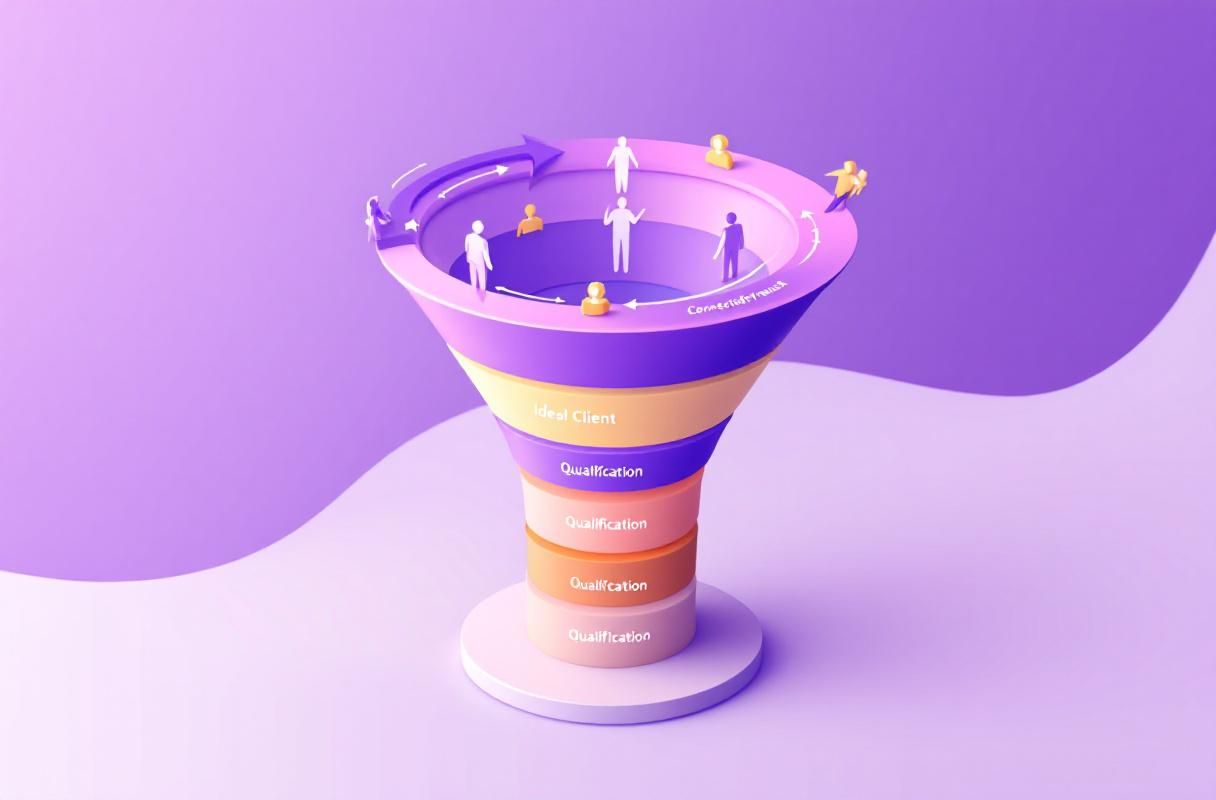
Traditional inside sales teams follow this model:
Step 1: Lead Generation
SDRs use tools like ZoomInfo, Apollo.io, or Sales Navigator to build prospect lists based on ICP criteria.
Step 2: Cold Outreach
- 40-60 cold calls per day
- 50-100 cold emails per day
- 20-25 LinkedIn connection requests per day (LinkedIn's limit)
Step 3: Meeting Setting
Goal: Book qualified meetings for Account Executives (AEs). Funnl.ai reports that 10-20 meetings per SDR monthly is typical for most B2B teams.
Step 4: Handoff to AE
AE takes qualified meetings and runs sales process to close.
Why This Model Is Failing in 2026
Problem 1: Response Rates Are Collapsing
- Cold email response rate: 5.1% (Gracker AI data)
- Cold call answer rate: Under 10%
- LinkedIn cold message response: 5-10%
Problem 2: Quota Attainment Is Too Low Only 55% of inside sales reps meet quota—meaning nearly half your team is underperforming, not because they're bad reps, but because the model doesn't work anymore.
Problem 3: Cost Per Lead Keeps Rising Inside sales calls average $50. At 40 calls/day, that's $2,000 in prospecting costs. With 5-10% conversion to meetings, you're paying $200-400 per meeting booked.
Problem 4: Buyers Research Before Engaging 75% of B2B buyers use social media to make purchasing decisions, and they research vendors long before they respond to cold outreach. By the time you call, they've already formed opinions about you—or more likely, they've never heard of you.
The LinkedIn Inbound Authority Alternative
Instead of 40-60 cold calls per day, what if qualified prospects reached out to you first?
That's exactly what happens when you build authority on LinkedIn—the platform where 80% of B2B social media leads originate.
How LinkedIn Inbound Authority Works
Phase 1: Visibility Through Strategic Engagement
Martal Group's research confirms: "Sales professionals who actively practice Social Selling are 45% more likely to meet or exceed their sales quotas."
ConnectSafely automates:
- Intelligent commenting on high-visibility industry posts
- Strategic engagement that positions you as an expert
- Consistent presence in conversations your prospects are already following
Phase 2: Authority Through Valuable Content
Averi.ai's 2026 playbook reveals: "For most B2B SaaS companies, 3-5 high-quality posts per week outperforms daily low-effort content, as the algorithm rewards substance over volume."
What this means: You don't need to post daily. You need to post value consistently.
Phase 3: Inbound Leads from Prospects Who Know You
When prospects research solutions (which 75% do on social media), they see:
- Your intelligent comments on posts they follow
- Your valuable content in their feed
- Your expertise demonstrated consistently
Result: When they're ready to buy, they reach out to you—not the other way around.
The Inbound vs Cold Outreach Comparison
| Metric | LinkedIn Inbound Authority | Traditional Inside Sales |
|---|---|---|
| Daily Activity | Automated strategic engagement | 40-60 cold calls + emails |
| Response Rate | 70%+ (warm, inbound) | 5-10% (cold outreach) |
| Lead Quality | High-intent prospects | Interrupted cold prospects |
| Cost Per Lead | $35 (decreases over time) | $200-400 (remains constant) |
| Close Rate | 14.6% | 1.7% |
| Quota Attainment | 80%+ | 55% |
| Account Risk | Zero (platform-compliant) | Medium (automation detection) |
Inside Sales KPIs That Actually Matter in 2026
Default's B2B KPI guide recommends: "Start with 5-7 core KPIs to avoid overwhelming your team, then expand to 15-20 metrics as processes mature."
Traditional Inside Sales KPIs (Lagging Indicators)
These measure past performance but don't predict future success:
1. Revenue Per Rep
- Sales revenue is the ultimate measure of success for any sales team
- Target: $500K-1M ARR per inside rep for SaaS
2. Conversion Rate
- Percentage of leads that become paying customers
- A high conversion rate indicates your team is efficiently moving leads through the funnel
- Traditional inside sales: 1-2% lead-to-customer conversion
- LinkedIn inbound: 10-15% lead-to-customer conversion
3. Quota Attainment
- Percentage of reps meeting/exceeding quota
- Traditional inside sales: 55% meet quota
- LinkedIn inbound teams: 75-85% meet quota
Leading Indicators (Predictive KPIs)
These predict future revenue and reveal problems before they impact results:
1. Meetings Booked
- 10-20 meetings per SDR monthly is typical for most B2B teams
- Consistently below that indicates list quality or outreach strategy needs work
2. Meeting Show Rate
- 60-80% show rate is considered good
- Below 50% suggests targeting the wrong people or improper meeting confirmation
- Inbound authority advantage: 85-95% show rate because they requested the meeting
3. Response Rate
- Cold email: 5.1%
- Cold call: Under 10%
- AI-assisted LinkedIn outreach: 10.3% (doubles cold email)
- Inbound authority: 70%+ (they know who you are)
4. Social Selling Index (SSI)
- LinkedIn's measure of your authority and engagement
- Sales professionals with high SSI are 45% more likely to meet quota
- Track this weekly; improving SSI predicts improving sales results
The 2026 Inside Sales Dashboard
Forecast.io's B2B sales KPI guide recommends tracking these categories:
| KPI Category | Traditional Inside Sales | LinkedIn Inbound Authority |
|---|---|---|
| Activity Metrics | Calls made, emails sent | Posts published, comments added, engagement rate |
| Connection Metrics | Meetings booked, show rate | Inbound connection requests, profile views, SSI score |
| Success Metrics | Revenue per rep, quota attainment | Close rate, inbound lead quality, CAC |
Key insight: Cleverly's 2026 guide emphasizes: "Separate outbound and inbound KPIs because they behave differently."
Modern Inside Sales Strategies for 2026
Monday.com's B2B lead generation research identifies these winning strategies:
Strategy 1: Hybrid Inbound-Outbound Model
Don't abandon outbound completely—just stop cold outreach.
The winning approach:
- Build inbound authority on LinkedIn (attracts 80% of leads)
- Use selective outbound ONLY for prospects who've engaged with your content
- Never cold message someone who doesn't know you
LinkBoost's ICP targeting guide confirms: "The overarching theme is a shift toward strategic, personalized, and value-driven outreach—companies winning on LinkedIn are treating prospects like people, not numbers."
Strategy 2: AI-Assisted Personalization at Scale
Gracker AI reports: "AI-assisted outreach doubles response rates (10.3% vs 5.1% cold email), and combining AI for scale with human personalization maximizes engagement."
How to implement:
- Use AI to research prospects (recent posts, company news, shared connections)
- Draft personalized messages based on specific triggers
- Sales rep reviews and customizes before sending
- Only contact prospects who've shown interest in your content
Strategy 3: Employee Advocacy Programs
Martal Group's research reveals: "Employee advocacy has become one of the most powerful, and underutilized, LinkedIn strategies, with companies where C-suite executives actively participate seeing 2.4x higher employee participation."
The multiplier effect:
- 10 sales reps building authority = 10X the visibility
- Each rep's network sees your company's expertise
- Prospects encounter multiple touchpoints before inbound inquiry
ConnectSafely advantage: Automates authority-building engagement for entire teams, not just individual reps.
Strategy 4: Account-Based Marketing (ABM) on LinkedIn
Donemaker's 2026 trends identifies: "ABM is gaining momentum on LinkedIn, with companies taking an account-centric approach to lead generation, and LinkedIn's powerful company and role targeting capabilities make it practically made for ABM."
Modern ABM approach:
- Identify 50-100 target accounts (not 10,000 prospects)
- Map all decision-makers at each account
- Build authority visible to those accounts specifically
- Engage with content published by target accounts
- Wait for inbound inquiries (they happen within 60-90 days)
Strategy 5: Signal-Based Engagement
Cognism's B2B sales guide recommends: "New executives who changed jobs in past 90 days are 2.5x more likely to buy, and filtering for companies growing at 20%+ year-over-year indicates budget availability."
Buying signals to track:
- Job changes (new role = new budget)
- Company funding announcements
- Engagement with your content (liked, commented, shared)
- Visited your profile multiple times
- Requested connection with you
ConnectSafely tracks these signals and prioritizes engagement with highest-intent prospects.
How to Structure an Inside Sales Team in 2026
The traditional SDR → AE model still works, but with one critical addition: the Authority Builder role (or automated authority building via ConnectSafely).
Traditional Structure (Broken)
SDRs (20% of team)
- Cold prospecting
- Meeting setting
- 10-20 meetings/month per SDR
- 55% quota attainment
AEs (80% of team)
- Take SDR meetings
- Run sales process
- Close deals
Problem: SDRs burn out on cold outreach; AE calendars stay half-empty.
Modern Structure (High-Performing)
Authority Builders (20% of team) OR ConnectSafely Automation
- Build LinkedIn authority through content + engagement
- Generate inbound lead flow
- Warm up target accounts for outbound
- Track buying signals
SDRs (15% of team)
- Qualify inbound leads
- Selective outbound to engaged prospects ONLY
- 30-40 meetings/month per SDR (2-3X traditional)
- 75%+ quota attainment
AEs (65% of team)
- Full AE calendars (more meetings from fewer SDRs)
- Higher close rates (warm leads vs cold)
- Shorter sales cycles
Team Ratios by Company Stage
| Company Stage | Authority Builders | SDRs | AEs | Why This Works |
|---|---|---|---|---|
| Startup (1-10 employees) | 0 (use ConnectSafely) | 1-2 | 2-4 | Founders + AEs sell; automation builds authority |
| Growth (11-50 employees) | 1-2 dedicated OR ConnectSafely | 2-4 | 6-10 | Authority generates inbound; SDRs qualify |
| Scale (51-200 employees) | 3-5 dedicated + ConnectSafely | 8-15 | 25-40 | Multi-channel inbound + selective outbound |
ConnectSafely: Inside Sales Authority Building on Autopilot
Traditional inside sales teams spend 60-70% of time on activities that don't generate pipeline:
- List building
- Cold prospecting
- Leaving voicemails
- Sending emails that get ignored
ConnectSafely automates the activities that do generate pipeline:
1. Strategic Engagement Automation
ConnectSafely's AI:
- Identifies high-visibility posts in your industry
- Adds intelligent, value-driven comments
- Engages consistently without manual effort
- Builds authority that attracts inbound leads
Martal Group confirms: "Regular posting, thoughtful commenting, expanding networks strategically" raise your Social Selling Index and drive quota attainment.
2. Content Distribution at Scale
Post once per week; ConnectSafely ensures your content reaches:
- Your ideal prospects
- Decision-makers at target accounts
- Connections most likely to engage and amplify
Blog.Brandsatplayllc research shows: "70% of B2B marketers view LinkedIn as the most effective platform for lead generation"—but only if your content reaches the right people.
3. Buying Signal Tracking
ConnectSafely monitors:
- Who views your profile repeatedly
- Who engages with your content
- Job changes at target accounts
- Company growth signals
Result: SDRs only reach out to prospects showing buying intent—not cold contacts.
4. Team-Wide Authority Building
Instead of 1-2 reps building authority, ConnectSafely scales across entire teams:
- 10 reps = 10X the visibility
- 10 personal brands reinforcing company expertise
- Multiple inbound lead sources
Cost: from USD $10/month per rep vs $2,000+/month for traditional inside sales prospecting costs.
Inside Sales Metrics: Traditional vs Inbound Authority
Here's what happens when you replace cold prospecting with inbound authority:
| Metric | Traditional Inside Sales | With LinkedIn Inbound Authority |
|---|---|---|
| Activities Per Day | 40-60 cold calls/emails | Automated engagement (no manual effort) |
| Meetings Per Month (Per SDR) | 10-20 | 30-40 (leads request meetings) |
| Show Rate | 60-70% | 85-95% |
| Cost Per Meeting | $200-400 | $30-50 |
| Close Rate | 1-2% | 10-15% |
| Sales Cycle | 60-90 days | 30-45 days (warm leads close faster) |
| Quota Attainment | 55% | 75-85% |
| CAC | $5,000-10,000 | $1,500-3,000 |
Bottom line: Inbound authority delivers 2-3X more meetings, 5-10X better close rates, and 60-70% lower CAC.
Getting Started: Transforming Your Inside Sales Team
30-Day Authority-Building Sprint
Week 1: Foundation
- Sign up for ConnectSafely (from USD $10/month per rep)
- Optimize LinkedIn profiles for authority (headline, about, featured content)
- Define target accounts and personas
Week 2: Content Strategy
- Identify 10-15 high-visibility posts per week to engage with
- Publish one valuable piece of content per rep per week
- Start automated strategic engagement via ConnectSafely
Week 3: Signal Tracking
- Track profile views and inbound connection requests
- Monitor content engagement (who likes/comments/shares)
- Build list of engaged prospects for selective outbound
Week 4: Selective Outbound Launch
- SDRs reach out ONLY to prospects who've engaged
- Reference specific content they engaged with
- Book meetings with warm prospects (not cold)
90-Day Transformation Milestones
Month 1 Results:
- Profile views increase 30-50%
- 5-10 inbound connection requests per rep
- 2-3 inbound lead inquiries
Month 2 Results:
- Profile views increase 60-100% vs baseline
- 15-25 inbound connection requests per rep
- 8-12 inbound lead inquiries
- Close first deals from inbound leads
Month 3 Results:
- Inbound leads become primary pipeline source
- SDR productivity doubles (same team size, 2X meetings)
- Quota attainment increases from 55% to 75%+
- CAC drops 40-60%
Frequently Asked Questions
What is inside sales and how does it differ from outside sales?
Inside sales is selling products or services remotely through phone, email, and video rather than in-person meetings. Inside sales costs $50 per call vs $215-400 for outside sales, but achieves lower quota attainment (55% vs 65%) because cold outreach response rates have collapsed. The 2026 winning strategy: hybrid models using inside sales for velocity with inbound authority to eliminate cold prospecting.
Why do only 55% of inside sales reps meet quota?
Traditional inside sales relies on cold prospecting with 5-10% response rates. Sales professionals practicing Social Selling are 45% more likely to meet quota because they build authority that attracts warm leads. LinkedIn generates 80% of B2B social media leads—reps building authority there access this lead flow; reps doing cold outreach don't.
What are the most important inside sales KPIs to track?
Start with 5-7 core KPIs: (1) Meetings booked per SDR (10-20/month typical), (2) Meeting show rate (60-80% good), (3) Response rate on outreach, (4) Social Selling Index (leading indicator of LinkedIn authority), (5) Conversion rate lead-to-customer, (6) Revenue per rep, (7) Quota attainment percentage.
How can I improve inside sales performance in 2026?
Replace cold prospecting with LinkedIn inbound authority building. AI-assisted outreach doubles response rates (10.3% vs 5.1%), but inbound leads from authority convert at 70%+ because they already know you. Use ConnectSafely to automate strategic LinkedIn engagement, track buying signals, and generate 10-20 qualified inbound leads per month per rep from USD $10/month.
Should I use inside sales or outside sales for my B2B business?
9 out of 10 companies use hybrid models in 2026, and hybrid teams see up to 50% higher revenue growth. Use inside sales for deals under $25K and shorter sales cycles; outside sales for strategic accounts over $50K. For both, add LinkedIn inbound authority to eliminate cold prospecting and improve close rates 5-10X.
How much does inside sales cost compared to outside sales?
Inside sales calls cost $50 vs $215-400 for outside sales. However, inside sales reps contacting 40-60 prospects daily at $50/call spend $2,000-3,000 daily on prospecting. LinkedIn inbound authority starts from USD $10/month per rep and delivers 10-20 qualified leads monthly—reducing cost per lead from $200-400 to $30-50 while improving close rates 8X.
What is Social Selling Index and why does it matter?
Social Selling Index (SSI) is LinkedIn's measure of your authority and engagement based on: (1) creating professional brand, (2) finding the right people, (3) engaging with insights, (4) building relationships. Sales professionals with high SSI are 45% more likely to meet/exceed quota because high SSI indicates strong authority that attracts inbound leads. Track SSI weekly; improving SSI predicts improving sales results.
Ready to transform your inside sales team from cold prospecting to inbound authority? Start your free trial with ConnectSafely from USD $10/month and discover why LinkedIn inbound delivers 45% higher quota attainment than traditional inside sales.
The Dark Side of Inbound Authority: When Thought Leadership Backfires
While building inbound authority on LinkedIn can be a powerful strategy for inside sales teams, it's not without its risks. One of the most significant drawbacks is the potential for thought leadership to backfire. When sales professionals position themselves as experts in their field, they can inadvertently create a sense of detachment or elitism. Prospects may feel intimidated or hesitant to reach out, fearing that they won't be able to keep up with the salesperson's level of expertise. Furthermore, if the salesperson's content comes across as too self-promotional or sales-y, it can damage their credibility and reputation. It's essential for inside sales teams to strike a balance between showcasing their expertise and being approachable and relatable. This can be achieved by sharing personal anecdotes, highlighting customer success stories, and using a conversational tone in their content. By doing so, sales professionals can build trust and establish themselves as trusted advisors, rather than just thought leaders.
Myth vs Reality: Debunking the Notion that Inbound Leads are Always High-Quality
One of the most common misconceptions in the sales industry is that inbound leads are always high-quality. While it's true that inbound leads are often more targeted and relevant than outbound leads, they're not always a slam dunk. In reality, inbound leads can be just as unqualified as outbound leads, and it's up to the sales team to properly vet and nurture them. For example, a prospect may download an e-book or attend a webinar, but that doesn't necessarily mean they're ready to buy. They may be in the early stages of research, or they may be looking for information to help them make a decision that doesn't involve purchasing a product or service. It's crucial for inside sales teams to have a robust lead qualification process in place to ensure that they're focusing on the most promising opportunities. This includes asking the right questions, assessing the prospect's pain points and goals, and determining whether they have the budget and authority to make a purchasing decision.
Advanced LinkedIn Strategies for Inside Sales Teams: Leveraging Employee Advocacy and Social Proof
For inside sales teams looking to take their LinkedIn game to the next level, employee advocacy and social proof can be powerful strategies. Employee advocacy involves encouraging and empowering employees to share company content and thought leadership pieces on their personal LinkedIn profiles. This can help increase the reach and engagement of the content, as well as provide social proof that the company is a thought leader in its industry. Social proof, on the other hand, involves showcasing customer testimonials, case studies, and reviews on LinkedIn to build credibility and trust with prospects. By leveraging employee advocacy and social proof, inside sales teams can create a robust and convincing narrative that resonates with their target audience. For example, a sales team could create a series of employee takeover posts, where different team members share their perspectives and experiences working with the company. Alternatively, they could create a social proof campaign that highlights customer success stories and showcases the results that customers have achieved using their products or services.
The Role of Intent Data in Inside Sales: How to Use It to Inform Your LinkedIn Strategy
Intent data can be a game-changer for inside sales teams looking to optimize their LinkedIn strategy. Intent data refers to the digital signals that prospects send out when they're researching a product or service online. By analyzing these signals, sales teams can gain insights into what prospects are looking for, what pain points they're trying to solve, and what topics they're interested in. This information can be used to inform the content and messaging strategy on LinkedIn, ensuring that the sales team is speaking directly to the needs and concerns of their target audience. For example, if the intent data shows that prospects are researching topics related to cybersecurity, the sales team could create content that addresses those specific pain points and concerns. By using intent data to inform their LinkedIn strategy, inside sales teams can create a more targeted and relevant approach that resonates with their prospects and drives results.
When to Use LinkedIn Inbound Authority vs Outbound Prospecting: It Depends on the Sales Cycle and Customer Journey
While LinkedIn inbound authority can be a powerful strategy for inside sales teams, it's not always the best approach. In some cases, outbound prospecting may be more effective, particularly in situations where the sales cycle is shorter or the customer journey is more complex. For example, if the sales team is selling a commodity product with a short sales cycle, outbound prospecting may be more effective in terms of speed and efficiency. On the other hand, if the sales team is selling a complex software solution with a longer sales cycle, LinkedIn inbound authority may be more effective in terms of building trust and establishing credibility. It's essential for inside sales teams to understand the nuances of their sales cycle and customer journey, and to use a combination of inbound and outbound strategies to achieve their goals. By doing so, they can create a more holistic and effective approach that drives results and grows revenue. Ultimately, the key is to be flexible and adaptable, and to use the strategy that best fits the needs and circumstances of the sales team and their prospects.
See How It Works
Watch how people get more LinkedIn leads with ConnectSafely




Related Articles